How Filmgoing Moved from Nickelodeons to Living Rooms
See how filmgoing moved from nickelodeons to living rooms, and choose a viewing setting that fits your attention, company, and preferred pace.
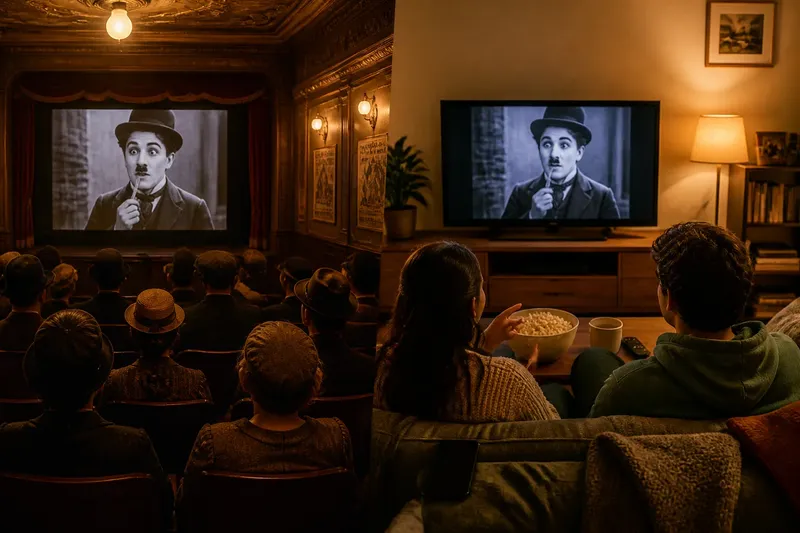
What changes when filmgoing moves from a nickelodeon to a living room? The shift from nickelodeons to living-room screens changes who controls the pace, what competes for attention, and how watching fits into ordinary life. It did not happen all at once: films moved through changing venues and technologies, while habits of gathering and watching changed with them.
Nickelodeon beginnings
In the early twentieth century, nickelodeons were small commercial venues devoted to motion pictures, commonly associated with inexpensive admission and short programs. Their precise arrangements varied by place and operator, so no single room or audience experience stands for every nickelodeon. What they shared was a public setting: viewers came to a venue, entered its program, and watched alongside other patrons.
That format made filmgoing a destination rather than one activity among many at home. The venue determined the schedule and sequence; viewers generally watched the program as presented instead of pausing it for conversation or returning to a scene. A shared screen also made reactions audible. Laughter or surprise could travel through the room, even among people who had arrived separately.
These early venues were part of a longer transition in screen entertainment, not an instant replacement for other forms of leisure. As film exhibition developed, purpose-built theaters and larger venues became prominent, while domestic access to moving images expanded through later technologies, including television and home video. The route from nickelodeon to living room was gradual, with different kinds of public and private viewing existing alongside one another.
Television at home
Television brought moving images into a domestic routine, where viewing could share time and space with meals, conversation, and other household activity. Unlike a nickelodeon visit, watching at home did not require leaving for a dedicated venue. The screen could become part of an evening rather than the sole purpose of an outing.
Later home formats added more control. Recorded programs and film releases let viewers choose when to watch; remote controls and playback functions made changing channels or pausing easier. Streaming services further loosened the link between a program and a broadcast schedule, though access and features vary by service and device. Each change gave viewers more control, but it did not remove the room’s distractions or the influence of other people present.
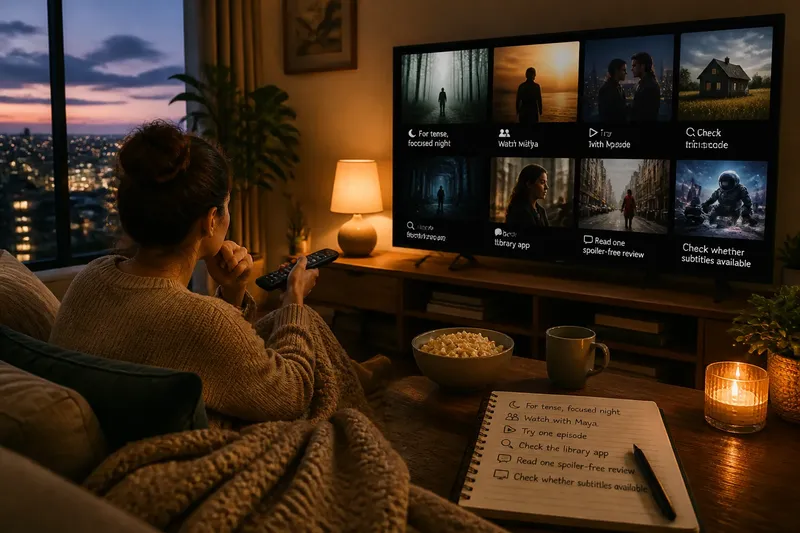
A living room is like a table where several things have been set down: the film is one object among many. A phone, a lamp, a snack, or a conversation can claim attention, while the sofa and familiar surroundings make it easy to settle in. The home offers flexibility, not automatic concentration.
Public and domestic viewing
Imagine Mara and her neighbor watch the same silent comedy first at a neighborhood screening and later at home. At the screening, they take seats among other viewers and cannot pause when a visual gag goes by. A nearby burst of laughter makes the scene feel like a shared event. At home, they put the phone in another room and leave a lamp on; when Mara pauses to discuss a gesture, her neighbor notices a detail and laughs. The tradeoff is clear: the public screening supplies an audience’s spontaneous response, while the home gives the pair control over timing and conversation.
Neither setting decides whether a film is engaging. A lively crowd can distract, and a quiet home can support close attention. The useful comparison is what each room makes easy: a public venue gathers people around a fixed program; home viewing makes it easier to adjust pace, sound, and company.
Choosing a viewing setting?
Why did nickelodeons matter?
They made motion pictures a public, paid entertainment in dedicated venues, where viewers watched a program together. Their local forms differed, so the experience depended on the particular room and audience.
How did television change filmgoing?
Television brought moving images into the home and made viewing easier to combine with domestic routines. Later home formats gave viewers more choice over timing and playback.
Is a theater more immersive than home?
A theater reduces some household distractions and places viewers before a shared screen, but its crowd and fixed schedule may not suit every occasion. At home, a considered setup can support attention, though other activities remain close by.
When is pausing helpful?
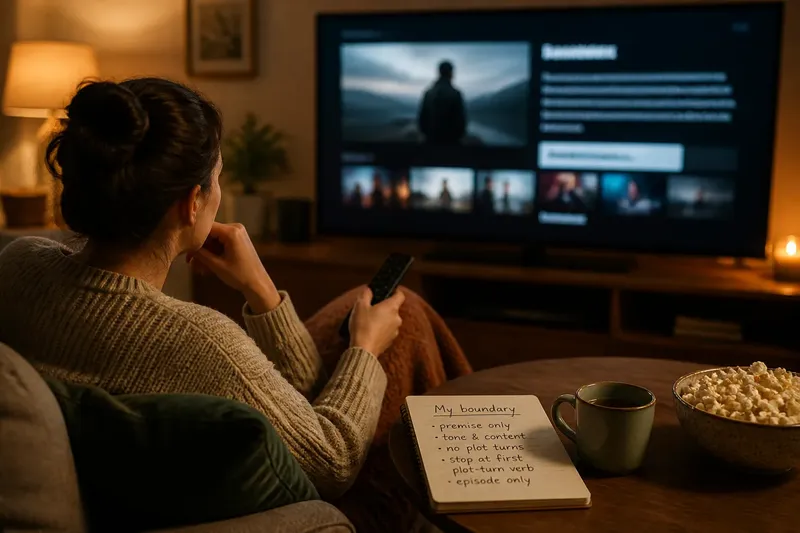
Pausing can help when you want to discuss a scene or look closely at a detail. If it breaks the film’s rhythm, agree to save comments for a natural break or afterward.
Match room to purpose
Before choosing, check the conditions that will shape this particular watch. Each observation points to a decision, with an alternative if the room does not fit your aim.
- Shared reactions: If you want the energy of strangers responding together, choose a public screening; if that sounds distracting, watch with one or two people at home.
- Control of pace: If you expect to pause or revisit a scene, choose home viewing; if interruptions would fragment the film, attend a scheduled screening.
- Room noise: If household sounds are likely to compete with dialogue, choose a quieter room or a theater; if neither is available, select a film that tolerates interruption.
- Company: If your companion enjoys conversation, agree on pauses at home; if they prefer uninterrupted viewing, save discussion until the credits.
- Screen and sound: If a film’s visual detail matters to you, choose the clearest available display and a seat with an unobstructed view; if the setup is poor, consider another screening or a different title for that occasion.
- Timing: If a fixed start time helps you protect the viewing, book a public screening; if your schedule is uncertain, choose a home format that lets you start later.
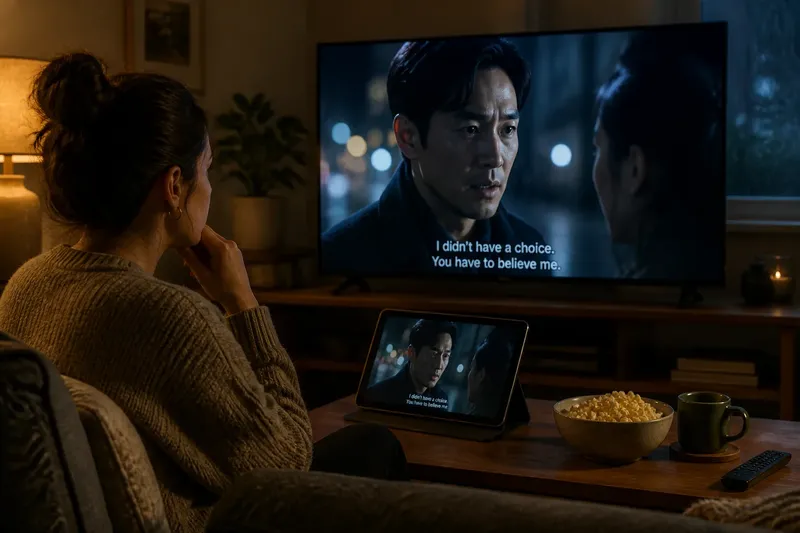
Say Mara has a subtitled film to watch with a friend who likes discussing scenes, but their living room is noisy and they have a quiet neighborhood screening available. They notice that conversation and flexible timing favor home, while the noise and desire to follow the subtitles favor the screening. They choose the screening and agree to talk afterward; if the venue proves too distracting, their alternative is to watch at home with the phone put away and conversation saved for breaks. The choice follows from the conditions, not a rule that public viewing is always better.
The nickelodeon-to-living-room shift is useful to remember when a film feels different from what you expected. Look beyond the screen itself: ask who controls the pace, what else can claim attention, and whether the occasion calls for collective response or private concentration. For your next watch, choose the setting that makes the kind of attention you want easier to give.