The Plot Summary That Gives Too Much Away
Plot summary spoilers can flatten a first viewing. Learn what to scan, where to stop, and how to choose a useful amount of story detail before pressing play.
How much should you read before pressing play? With plot summary spoilers, the useful boundary is the point where a description stops helping you choose and starts answering questions the story would otherwise raise. Decide what you need first, then read only for that information.
You may want to know whether a film is funny, whether an episode continues a cliffhanger, or whether a title suits the evening. Those are reasonable selection questions. Learning who betrays whom or how a conflict ends is a different kind of information, and you can often avoid it without choosing blindly.
Choose your information
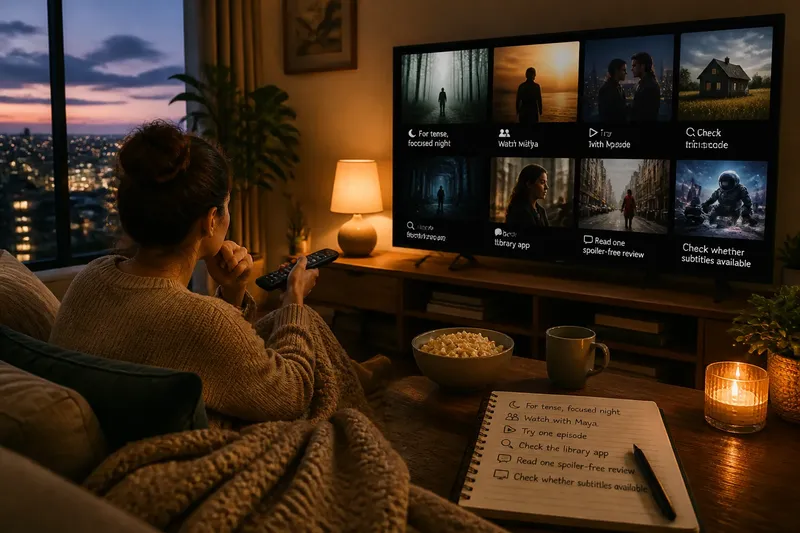
Before opening a synopsis, name the decision in front of you. If you are choosing between a film and an episode, format and runtime may be enough. If your mood is the deciding factor, tone and broad subject may matter more than the sequence of events.
Use the narrowest source that answers your question. A title page may provide genre and format; a short blurb may explain the premise; a content advisory may address a specific concern. A full synopsis is useful only when you want a fuller account of the plot.
Spot plot turns
Many summaries begin with a starting situation, then add developments to make the work sound compelling. Verbs such as “discovers,” “returns,” “confronts,” “realizes,” and “teams up” often mark a move beyond that setup. They do not always signal a major surprise, but they tell you that the story has begun to change.
Consequences can disclose a later stage even when the cause is left vague. A character who faces trial, leaves home, or must repair a relationship has already reached a point the story may have intended you to encounter gradually. Ask whether the sentence describes the initial conditions or tells you where events lead.
Taglines can also hint that a surprise is coming. Phrases such as “nothing is as it seems” may preserve the detail while revealing that a twist is part of the experience. If you want to keep that uncertainty, skip the tagline as well.
Television descriptions need an extra check: a season summary may cover several episodes, while an episode summary may assume you have seen earlier events. Confirm which page and episode are selected before reading. A page that combines both can reveal more than its heading suggests.
Set a stopping point
Choose a boundary before scanning. It is easier to stop at a clear point than to decide sentence by sentence while each new detail invites another. Think of it like reading a tin label: you need to know what is inside, not the whole story of how it was made.
- Title and format: If the page names the film or episode and identifies its format, use that information to decide whether it fits your available viewing time; if it is the wrong format, return to your queue without reading the synopsis.
- Tone: If broad mood words match the evening you want, keep the title in consideration; if they do not, choose another option rather than searching further into the plot.
- Starting premise: If the opening sentence explains the initial situation, stop there and decide whether that premise interests you; if it does not, move on without reading later developments.
- Content guidance: If a focused advisory answers a specific concern, use it to decide whether the title feels suitable; if it gives too much plot detail, close it and seek a shorter, topic-specific note.
- Plot-turn verbs: If a sentence introduces a discovery, reversal, alliance, departure, or consequence, stop before the next sentence; if the page has already passed that point, leave it and make your choice from the details you have.
- Page scope: If the heading clearly identifies the selected episode, read only its description; if the page mixes episode and season information, return to the episode list and use a clearly labeled entry instead.
These checks are options, not a mandatory sequence. If you already know the genre and have chosen the title, a synopsis may add little. If the premise is unfamiliar, a short description can help you decide without supplying the whole story.
Say you are choosing a mystery for a quiet evening and want to avoid learning its later turns. The title page identifies a feature film, and its first sentence describes a missing painting and an investigator asked to find it. You read no further when the next sentence says the investigator uncovers a family connection. You now know the starting situation and can decide whether it appeals, while leaving that connection for the film to reveal.
Common reading questions?
Is the short description safer than the full synopsis?
Not always. A short blurb can reveal a surprise, while a longer account may stay close to the premise, so judge the details rather than the length.
Should I read reviews before watching?
Reviews can help you assess tone or pacing, but they may discuss specific scenes and turning points. Choose a spoiler-light review if available, and stop when it shifts from broad impressions to plot sequence.
How can I check content without learning the ending?
Look for a focused advisory that names the material relevant to your decision rather than recounting the story. If it is detailed, use its headings or brief labels and avoid opening sections that do not concern you.
What if a platform shows the synopsis automatically?
Read the viewing details you need, then move away from the description. If the interface offers a shorter blurb or a hide-details control, use it; otherwise, close the page and return to your queue.
Match detail to mood
Your preferred limit can change with the viewing choice. A familiar genre may need little explanation, while an unfamiliar format may call for a short premise. If you want atmosphere rather than plot, look for a broad subject or tone note and stop when it answers that need.
When several people are choosing together, ask what kind of experience the group wants before reading details aloud. One person may welcome a full account while another prefers only tone and premise. Agreeing on the amount of context keeps one preference from becoming the default for everyone.
Keep a small note
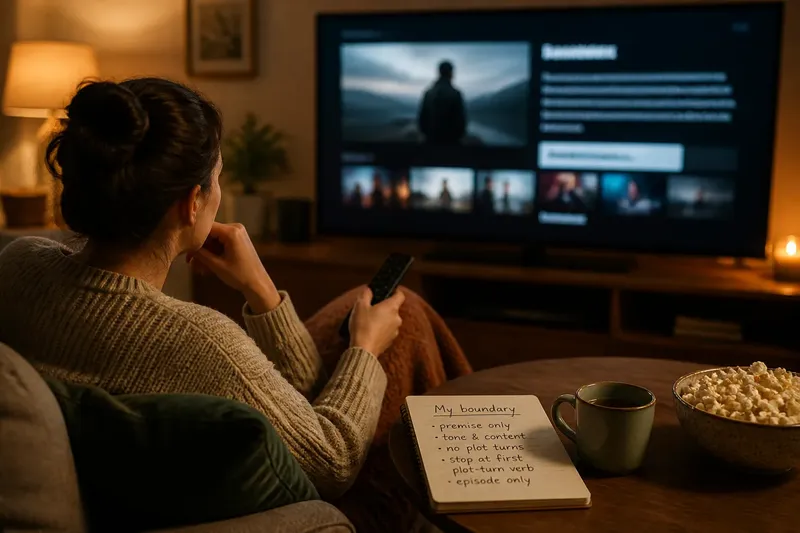
If descriptions often reveal more than you want, add a brief preference beside a title in your own list: “premise only,” “tone and content,” or “full synopsis is fine.” When the title comes back into view, the note helps you remember the boundary you chose.
Use the same boundary with a friend’s recommendation. Ask for the starting premise rather than the sequence of events, or say that you would prefer a spoiler-light description. A clear request gives the other person a practical way to help.
Plot summary spoilers are easier to avoid when you identify your question before opening a description. On your next viewing day, decide whether you need tone, a premise, or a specific content note, then stop once that need is met. That small choice lets you arrive at the film with context you wanted, rather than details you happened to encounter.